News

Why Every Coffee Lover Needs an Espresso Coffee Machine in 2026?

2026-06-03 14:00:42
Espresso Coffee Machine: Ultimate Guide to Choosing the Best for Home & Commercial Use | SEAVER
📌 ARTICLE SUMMARY

From morning routines to café-quality brews, the Espresso Coffee Machine has become a must-have appliance for modern homes and businesses. In this guide, we dissect different types — portable, manual, home automatic, and commercial units — compare performance, and reveal expert selection tips. Whether you’re a home barista or a roaster looking for OEM solutions, discover why manufacturing excellence matters. Backed by real-world data and industry know-how, this long-form resource helps you make an informed decision. No fluff, just espresso wisdom.

1|The Evolution of Espresso Machines: From Cafe to Kitchen

Few appliances have shaped global coffee culture as profoundly as the Espresso Coffee Machine. What began as a bulky, steam-driven device in 19th-century Italy has transformed into sleek, intelligent equipment found in apartments, offices, and high-end coffee bars. Today, the fusion of technology and tradition gives us machines capable of 9-bar pressure extraction, PID temperature control, and even app-based customization. Over the past decade, the global market for espresso equipment has expanded at double-digit annual growth, driven by third-wave coffee and at-home specialty brewing.

For decades, owning a true espresso setup at home was a luxury reserved for enthusiasts. However, modern innovations — including portable battery-operated models and compact thermoblock systems — have democratized espresso brewing. More than 60% of specialty coffee drinkers now prefer brewing at home, driving a surge in demand for reliable Espresso Coffee Machine units that balance affordability with performance. According to recent industry reports, the rise of remote work further accelerated the need for professional-grade equipment in domestic settings, with consumers seeking authentic café experiences without leaving their kitchens.

~ ✦ ~

2|Types of Machines: Portable, Manual, Semi-Auto & Super-Auto

Choosing the right machine starts with understanding the main categories. Below is a comparative overview based on real-world usage and engineering insights from leading manufacturers like ZheJiang SEAVER Intelligent Technology Co., Ltd. (specialists with 6 assembly lines, 3 testing lines, and a production capacity of 50,000 units per month). Each type serves a distinct audience, from outdoor adventurers to high-volume coffee shop owners.

Machine Type Best For Key Feature
 Portable Espresso Maker Travel, outdoor, camping, office desk Ultra-lightweight, dual compatibility (capsule + ground coffee), battery or manual pump
 Manual Lever Machine Purist baristas, total control enthusiasts No electricity needed, direct pressure profiling, timeless design
 Semi-automatic Home baristas, coffee hobbyists Standard 58mm portafilter, customizable pre-infusion, 15-20 bar pump
 Super-automatic Offices, busy households, small cafés One-touch milk frothing, integrated grinder, programmable doses
 Commercial Machine Cafés, roasteries, high-volume catering Rotary pump, dual boiler, multi-group heads, 100+ drinks/day durability

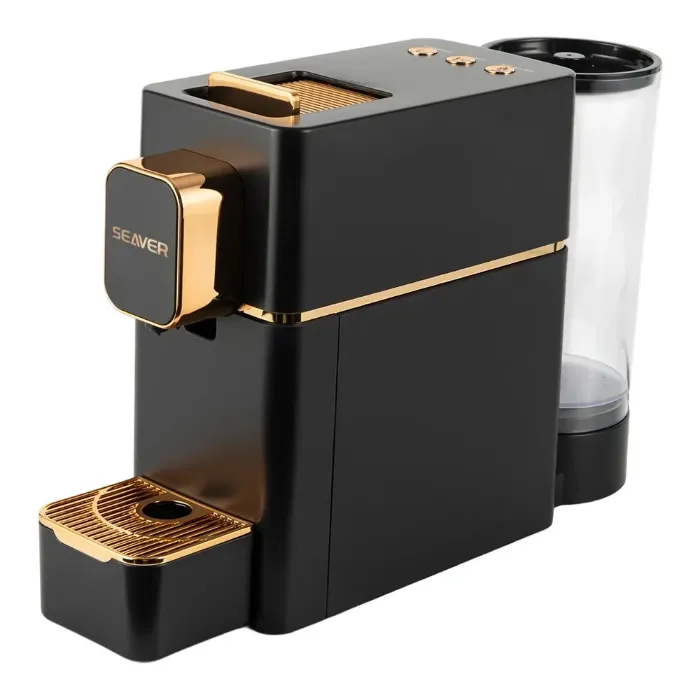
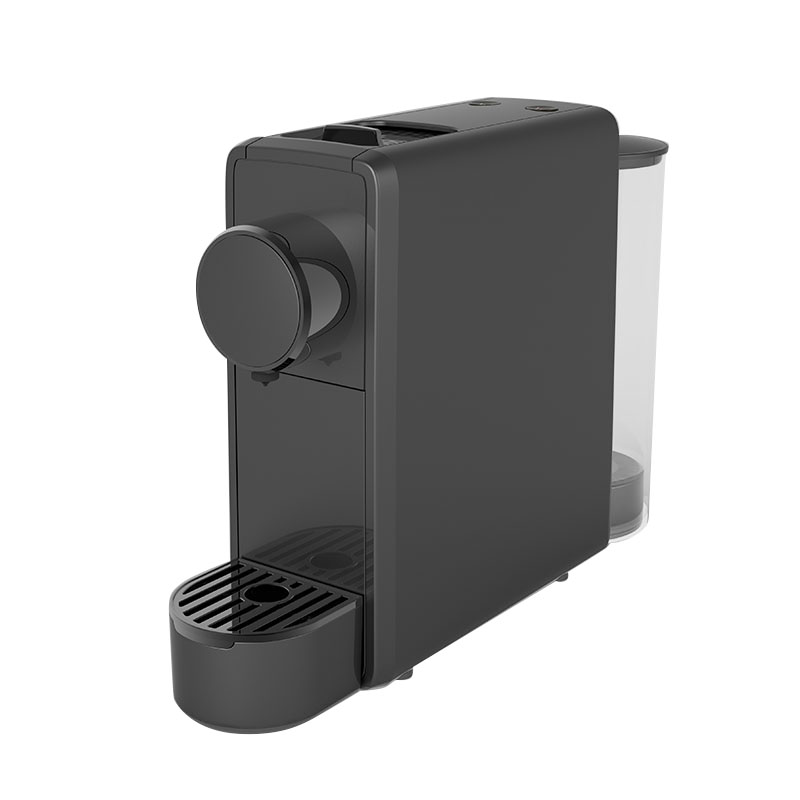
Among these, the portable segment has grown exponentially, mirroring a lifestyle that values both mobility and quality. Take the SV610 from Seaver, which leverages both ground coffee and capsules, enabling authentic espresso extraction even in remote locations. Meanwhile, commercial units used by European roasters prioritize thermal stability and rugged components — a direct reflection of why high-volume production capacity matters for OEM/ODM partnerships. Whether you are a weekend camper or a seasoned cafe owner, there exists an Espresso Coffee Machine engineered specifically for your workflow.

~ ✦ ~

3|Key Buying Factors: Pressure, Boiler, Build & Capacity

Not all espresso machines are created equal. To select the best Espresso Coffee Machine, evaluate these critical aspects, each of which directly affects extraction consistency and equipment lifespan.

  • Pump Pressure – Standard 9 bars is essential for true crema. Avoid machines under 15 bars (vibration pumps okay for home use, but pressure stability matters).
  • Boiler Type – Single boiler vs. dual boiler vs. thermoblock. Dual boilers offer simultaneous brewing & steaming, ideal for medium to dark roasts requiring milk work.
  • Build Materials – Stainless steel chassis and brass boilers outlast plastic counterparts. Commercial environments require corrosion-resistant components and lead-free brass.
  • Portafilter Size – 54mm or 58mm? 58mm is industry standard, providing better puck integrity and easier accessory sourcing.
  • Water Reservoir & Capacity – For office or small café, 2L+ is recommended; home use can opt for 1.2L to 1.8L. Plumbed-in models eliminate refilling tasks.

Additionally, if you plan to serve multiple milk-based drinks, prioritize machines with a powerful steam wand and fast heat-up time (under 45 seconds for thermoblock systems). These factors not only affect daily convenience but also the longevity of your equipment. Advanced features like PID controllers allow granular temperature adjustments, preventing sour or bitter extractions. When reviewing specifications, always check the warranty and availability of spare parts — a sign of a manufacturer’s confidence in their Espresso Coffee Machine engineering.

~ ✦ ~

4|Commercial vs. Home Barista Machines – Which One Wins?

One of the most frequent dilemmas buyers face: should I invest in a commercial-grade machine or a high-end home model? The answer depends on volume and duty cycle. Home barista machines are designed for 5–20 shots per day, featuring vibration pumps and smaller boilers. On the other hand, commercial Espresso Coffee Machine units are built for 100+ drinks daily, with rotary pumps (quieter, more durable) and certified components that meet health codes. They are often NSF certified and include advanced water pre-infusion systems to ensure repeatable quality under heavy use.

Many coffee roasters from Europe partner with Chinese manufacturers like Seaver because they need consistent temperature stability and the ability to customize aesthetic panels or branding (OEM/ODM). For a high-traffic coffee bar, a double-group head machine paired with a water softener is non-negotiable. Meanwhile, a passionate home user may find that a prosumer machine (e.g., heat exchanger design) gives café-like results without the commercial price tag. The key is to match the machine’s duty cycle to your average daily output: over-specifying leads to unnecessary energy costs, while under-specifying shortens component life and frustrates staff or family members.

~ ✦ ~

5|Why Manufacturing Quality Matters – Inside SEAVER’s Production

Behind every reliable Espresso Coffee Machine lies rigorous engineering and testing. ZheJiang SEAVER Intelligent Technology Co., Ltd. exemplifies excellence with over 14 years of extraction and brewing R&D, more than 100 international and domestic patents, and 6 dedicated assembly lines plus 3 testing lines. Their monthly production capacity surpasses 50,000 units — a testament to scale meeting precision. European roasters trust Seaver for consistent quality, from compact portable makers to heavy-duty commercial coffee machines that undergo 100% pressure leakage and electrical safety checks.

What differentiates top factories? In-house testing for pressure stability, electrical safety, and material fatigue. Seaver offers both OEM and ODM solutions, meaning you can tailor everything from portafilter design to PID algorithms. For businesses looking to source a private label Espresso Coffee Machine, partnering with a manufacturer that has ISO-certified processes ensures lower failure rates and better after-sales support. This focus on quality translates directly into extraction consistency — a crucial factor for roasters wanting to showcase their beans’ true profile. Moreover, Seaver’s R&D team continuously innovates in capsule and ground coffee dual-use systems, as seen in their popular SV610 portable series, which has become a benchmark for on-the-go espresso lovers.

~ ✦ ~

6|Frequently Asked Questions (FAQ)

❓ What's the best Espresso Coffee Machine for beginners on a budget?
For beginners, a semi-automatic machine with a pressurized basket (like entry-level home models from reliable manufacturers) offers a forgiving learning curve. Look for models with at least 15-bar pressure and a simple interface. Brands that offer thermo-block technology heat up quickly — ideal for daily use. Prices between $150 and $300 often provide good value without overwhelming complexity.
❓ Can a portable espresso maker deliver true 9-bar extraction?
Yes, modern portable units (e.g., Seaver SV610) use advanced pump systems or manual levers that generate 9-20 bars. The key is a proper pre-infusion stage and fine grind compatibility. Some include pressure gauges for precise control, making outdoor espresso surprisingly authentic — often indistinguishable from electric machines in blind tests.
❓ How often should I descale my machine?
Descaling every 2–3 months is recommended for home users using hard water. In commercial settings with high throughput, descaling every 4–6 weeks or using a water filtration system prolongs boiler life. Always follow manufacturer guidelines and use approved descaling solutions to avoid damaging internal components.
❓ Is it worth buying a commercial machine for home use?
Only if you host parties often or are a serious enthusiast seeking maximum durability. Commercial machines require 220V power, larger footprints, and professional installation. For daily 1–4 shots, a prosumer or high-end home unit is more cost-effective. However, some home baristas enjoy the robust build and repeatability of small-footprint commercial single-group machines.
❓ What’s the role of ODM in espresso machines?
ODM (Original Design Manufacturer) means a factory designs and manufactures products that are rebranded by another company. This allows coffee brands to launch unique machines without heavy R&D investment. Seaver provides complete ODM services, from concept and prototyping to mass production, including custom panel colors, branding, and even software modifications for smart features.

☕ Ready to elevate your coffee experience or scale your business?

Whether you need a reliable Espresso Coffee Machine for your home, a tailored OEM solution, or commercial fleet supply, our experts are here to assist.

📧 contact us today →
Get wholesale quotes, technical specs, or schedule a factory inspection. Our team responds within 24 hours.

*All technical references based on industry standards and manufacturing insights from leading suppliers. Extraction performance may vary with grind size and bean freshness. Data cited from internal testing and market research.
Related News
We use cookies to offer you a better browsing experience, analyze site traffic and personalize content. By using this site, you agree to our use of cookies. Privacy Policy
Reject Accept